Domain(s)

Mobile Apps

Platform

iOS & Android

All countries

My responsibility

App Product Manager @ DefShop

Release

Sept 2017

To explore whether a native app could drive real business value for DefShop, we launched a quick MVP using Shopgate, then scaled up to fully native iOS and Android apps built from scratch. What began as a marketing-led experiment evolved into a cross-functional product initiative, growing app revenue from zero to over €1.3 million per month, reaching 815k+ installs, and earning 4.7-star ratings. Along the way, I transitioned from marketer to product manager, learning by doing, and building something that became a core growth channel for the business.

Situation

At the Crossroads of Data, Design & Delivery

When I joined DefShop in January 2015, I initially led Campaign Management, responsible for executing high-impact marketing campaigns with brands like Lacoste, New Era, and Reebok. As a fashion e-commerce company, DefShop specialized in urban streetwear (think sneakers, hoodies, and sweatpants) with deep cultural ties to the hip hop music community.

My role extended beyond campaign execution. I also oversaw email marketing, sending over 76 million emails per year. While technical behind the scenes, email was one of our most visible customer touchpoints. This meant frequent collaboration with engineering, design, and category management, while keeping all other marketing teams aligned. It gave me a unique vantage point across both product and communication layers, and shaped my lasting appreciation for data and user insights as decision-making tools.

At the time, major e-commerce players in Germany were starting to explore native mobile apps as alternatives to traditional websites. Because my role already sat at the intersection of so many teams, leadership approached me with a new challenge:

“Would you be up to exploring whether a native app could be valuable for DefShop?”

One thing was clear: this wasn’t about launching a full-scale app. It was about testing fast, learning cheap, and figuring out whether mobile apps could actually move the needle for us.

Spoiler: It got big pretty fast once we had the first results.

Task

Can a Native App Drive Real Impact?

Our goal was to evaluate whether a native mobile app could drive real business value for DefShop. We set out to build an easy, fast, and scalable MVP—lightweight enough to test quickly, yet high-quality enough to deliver a smooth experience for our users. It was about learning fast while laying the groundwork for something bigger.

Once we saw strong early results, the task evolved: from validation to building fully functional native apps that could compete with industry leaders like Zalando and Adidas. That meant investing in robust frontend and backend development, creating the internal structures to support long-term success, and implementing critical systems for tracking, deep linking, and attribution.

Primary Success

App Revenue

Session to Order CR

Secondary Success

App Installs

App Store Ratings

User Retention

Guardrail Metrics

App Crash Rate

App Exit Rate

Customer Support Tickets

Tradeoff Metrics

Website Revenue

Actions

From MVP to Market: How We Built the App

We started small to learn fast, beginning with a plug-and-play solution to validate our assumptions before committing to full product development. Over time, we scaled up our efforts based on real user insights and business signals.

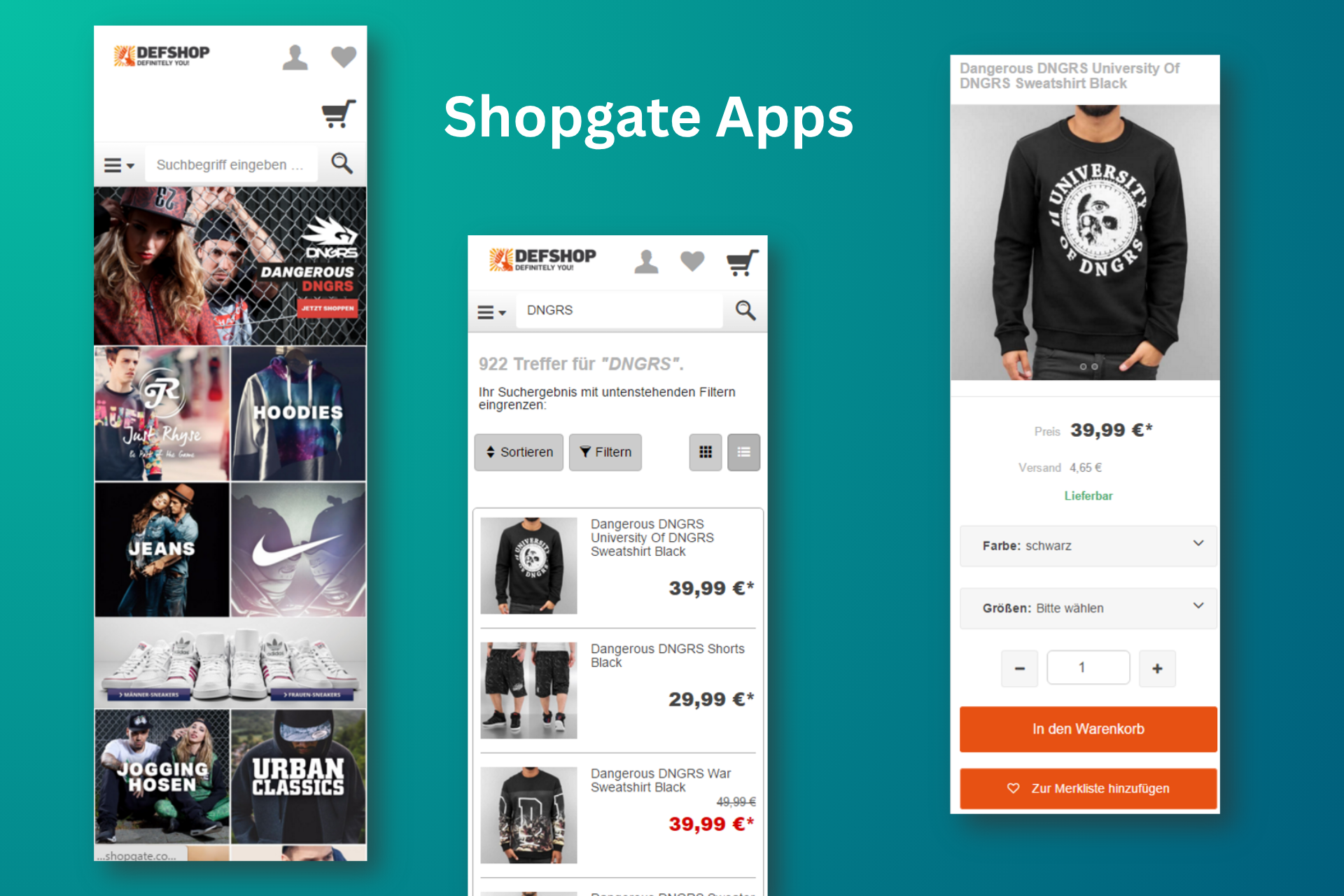
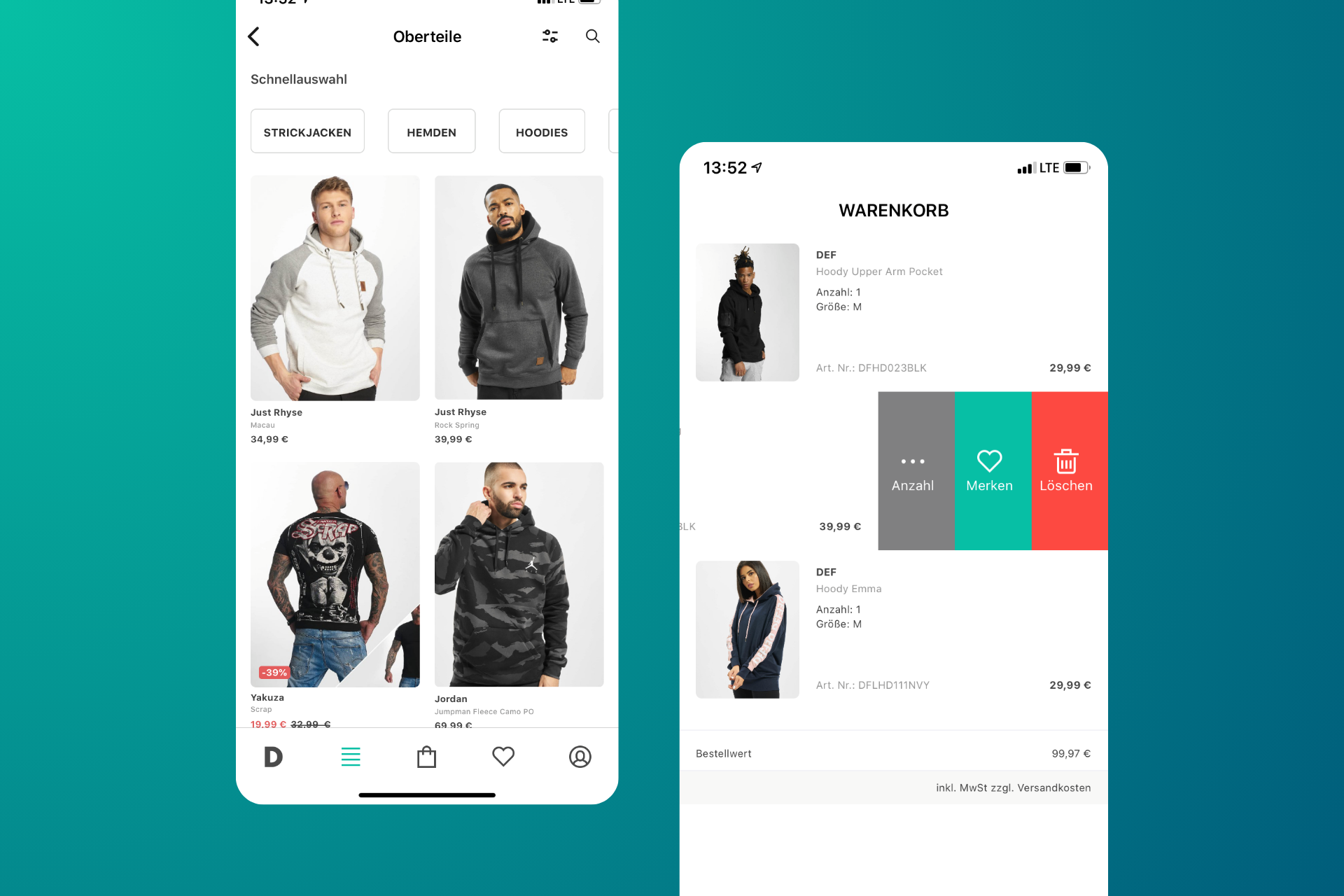
In February 2016, we launched DefShop’s first native apps using Shopgate, a plug-and-play platform. We connected our APIs to deliver our product catalogue and price updates and customized the frontend to reflect our brand. The rollout was fast and low-effort, and early results showed strong community acceptance and promising business impact.

While the Shopgate solution worked well for testing, we quickly hit technical limitations on both backend and frontend. In June 2016, we partnered with an external agency to design and develop fully native iOS and Android apps, including the frontend and backend infrastructure needed to build a sustainable, high-performance product.

Together with the agency, we implemented the technical building blocks that would enable long-term success: deep linking, tracking, and attribution models. These systems allowed us to analyse user behaviour, attribute conversions accurately, and optimize our marketing and product efforts.


In August 2017, we launched a closed beta for iOS and Android with 5,000 test users from the DefShop community. Feedback was overwhelmingly positive: users engaged with the apps regularly, and we felt confident that we were on the right track.

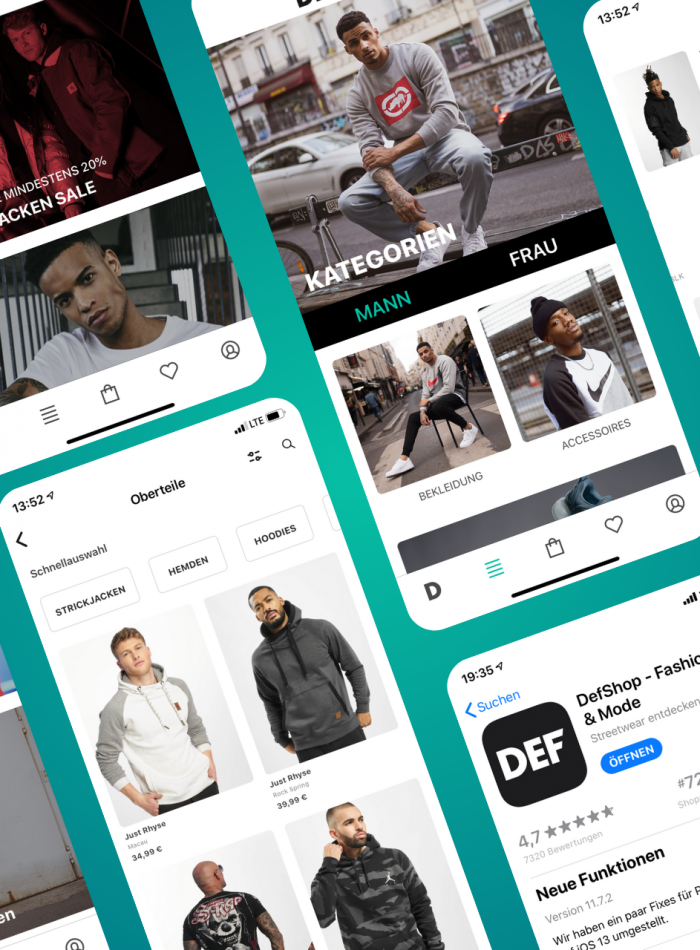
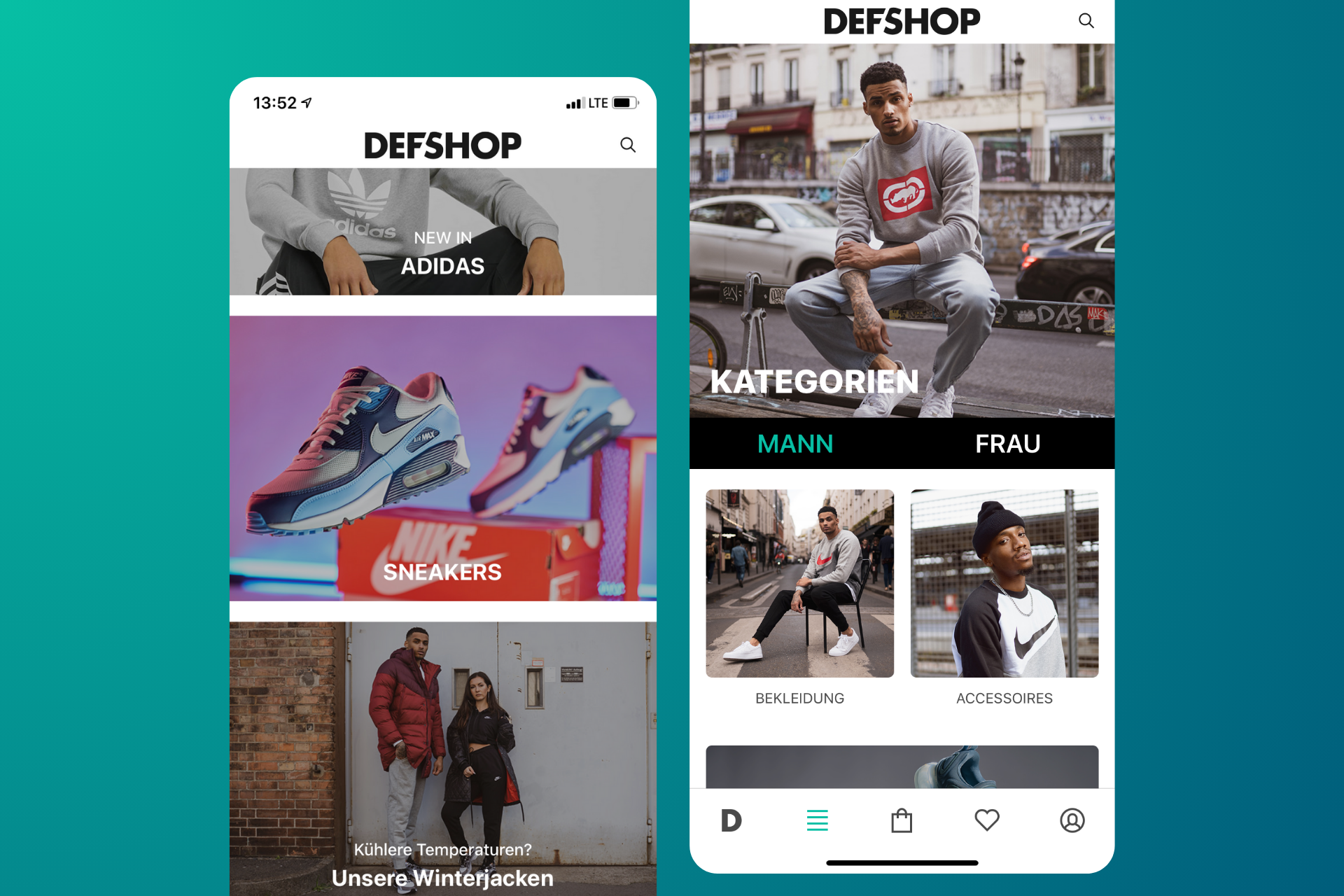
In September 2017, we officially launched the new native apps to the public. While core business metrics looked good, user feedback told a different story: our app ratings dropped to 2 stars on both platforms. The main issues? Bugs, crashes, and unfiltered negative reviews.

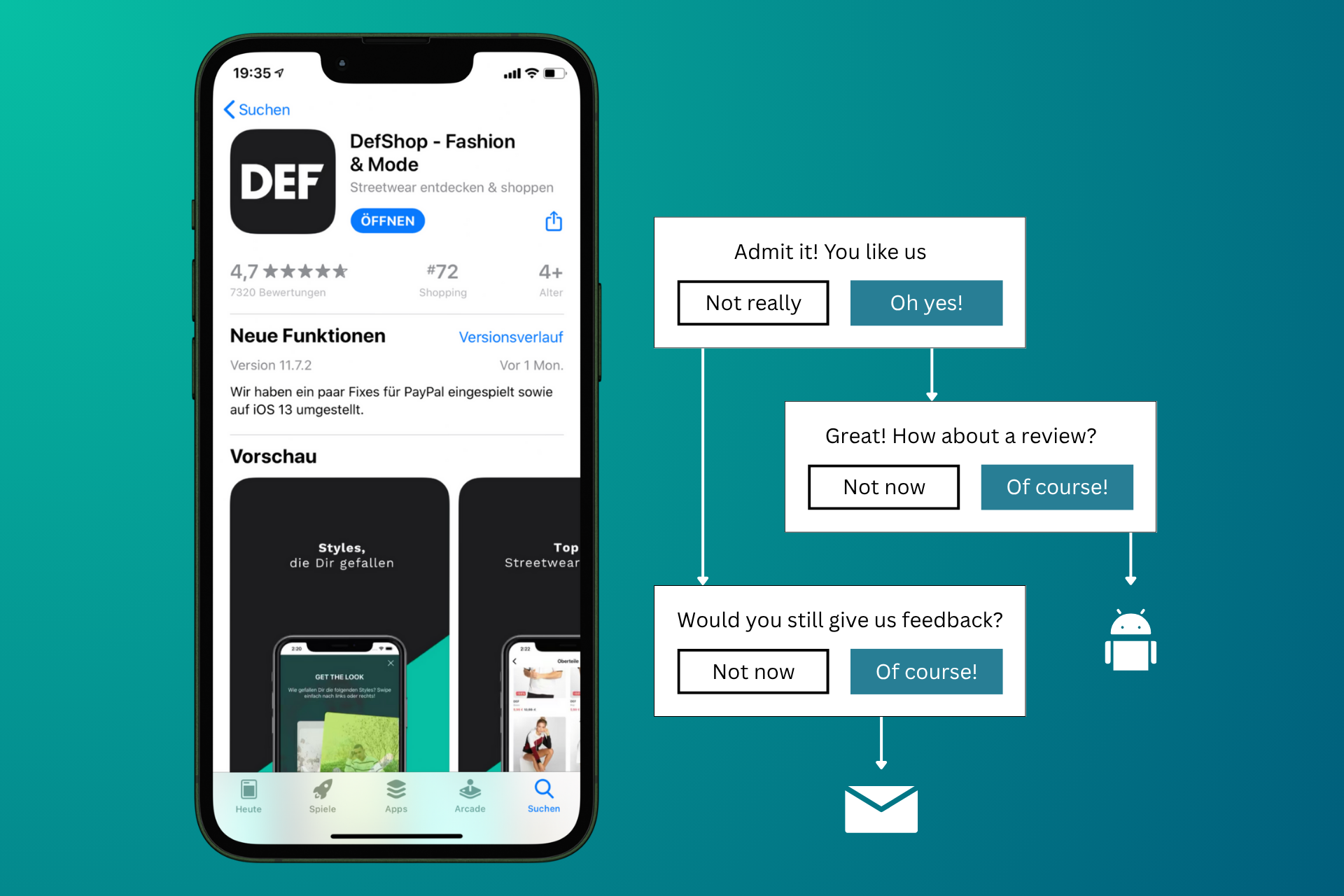
We quickly triaged technical issues and improved app stability. But we also realized that only unhappy users were leaving reviews. We introduced in-app prompts asking satisfied users to rate the app, resulting in over 10,000 reviews and raising our average rating to over 4.5 stars.

With the foundation in place, we transitioned ownership of the app to a newly formed internal team of engineers. This allowed us to move faster, integrate more deeply with the business, and drive ongoing improvements based on direct insights, metrics, and user feedback.

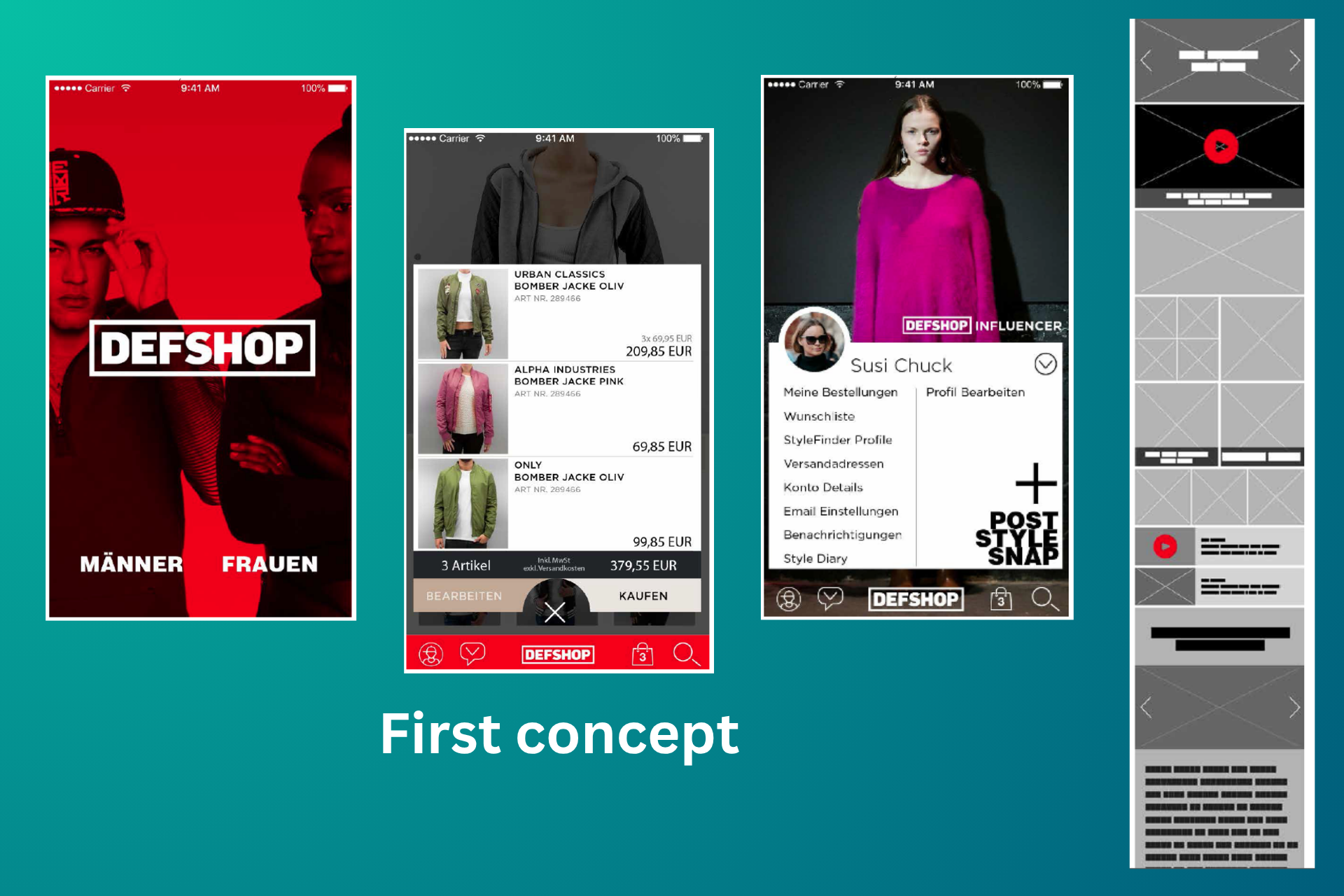
DefShop App - Steps

Frameworks/Methods

We approached this project with a lean experimentation mindset, starting with a plug-and-play MVP to validate user demand quickly. Throughout the process, we applied user-centred design, using community feedback loops (e.g., closed beta, app reviews) to prioritize improvements. Our decisions were informed by data-driven product thinking, constantly monitoring key business and behavioural metrics to guide the next iteration.

Deliverables

We delivered fully functional native iOS and Android apps, built from the ground up based on validated user demand. The initial MVP was created using Shopgate, allowing us to test quickly with minimal investment. Later, we partnered with an external agency to develop a scalable, high-quality app experience. Key deliverables included a closed beta program with 5,000 users, implementation of in-app rating prompts to improve user reviews, and a working foundation for continuous product iteration based on real-time user data.

Tools used

We used Shopgate to launch our MVP with speed, and later collaborated with an external development agency for the native app build. Firebase supported us with crash reporting, analytics, and push notifications, while Google Analytics helped us understand user behaviour across platforms. We tracked progress using JIRA, monitored reviews and updates via App Store & Google Play Console.

Results

From Zero to €1.3M revenue

This project was more than just an app launch, it was a turning point in my young career.

When we started, neither I nor most of the team had a background in product management or app development. What we did have was curiosity, a shared purpose, and a strong focus on our users and business outcomes.

We learned fast, hands-on. I found myself designing backends and CMS workflows, debugging attribution models, setting up deep linking, and iterating on event tracking. I dived into user-centred frontend design, and quickly picked up the product fundamentals I didn’t know I was already practicing.

Before long, the results followed:

  • We grew monthly app revenue from 0 to over €1.3 million
  • App revenue grew by an average of 91% year-over-year (2018–2020)
  • We reached over 815,000 installs, collaborating with Apple, YouAppi, and Taptica
  • We earned the trust of our users, with 4.7 stars and more than 10,853 ratings

At some point, deep in discussions about backend architecture and growth metrics, it hit me: I wasn’t working in marketing anymore. I was doing product management.

Strategic Impact

Our native apps became more than just a new touchpoint, they grew into a strategic channel for DefShop. The apps helped us reach high-quality, loyal customers, deliver a seamless shopping experience, and generate a significant share of total company revenue.

Next steps

We kept investing in the app experience, using it not only as a sales driver but as a core part of our marketing, especially during high-stakes moments like Black Friday. The app became a key platform for experiments, campaigns, and personalized user engagement.

Learnings

This project changed my career. I discovered that learning by doing, focusing on users and outcomes, and collaborating with people who care deeply can truly move mountains.

Great products are never built in silos. I’d like to thank all the wonderful people at DefShop that supported this project, but especially Matthias Spangenberg, Alexander and Andreas Büchler, David Jantsch, Lukas Spangenberg, Eric Schreiterer, Achim Feldtmann, Raxis Soni, Steffen Merz and everyone else that I forget to name personally.

Want to see more?

Discover my work portfolio

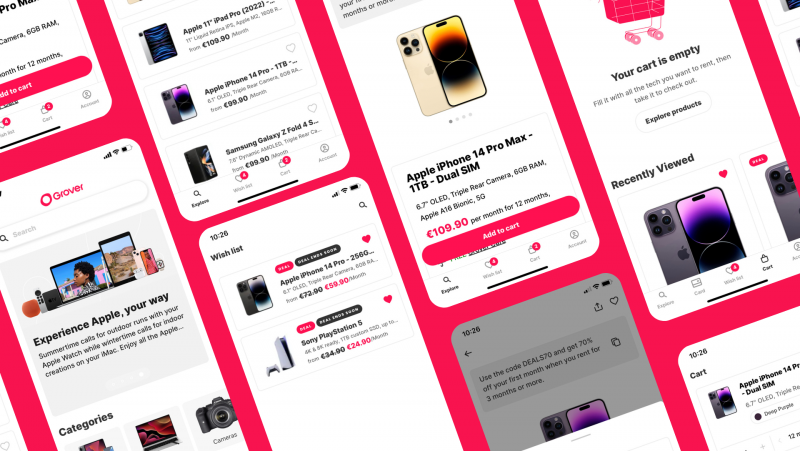
Native Apps (Grover)
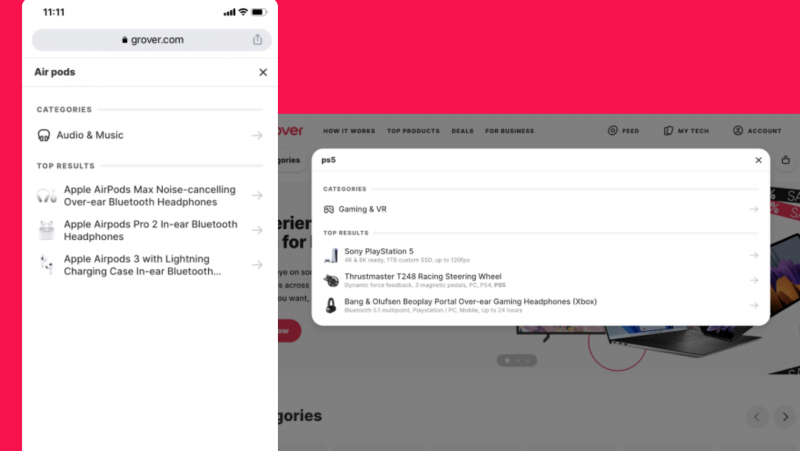
Internal Search (Grover)
Navigation & Header (Grover)
Scroll To Top